
Manikarnika Ghat History: Legends, Religious Significance and Ancient Traditions
Manikarnika Ghat stands among the most sacred and historically significant ghats of Varanasi, Uttar Pradesh. Situated on the banks of the River Ganga, this revered site holds deep importance in Hindu traditions surrounding death, cremation and spiritual liberation.
Unlike the ghats known primarily for morning prayers or evening celebrations, Manikarnika Ghat represents the Hindu understanding of life’s impermanence and the cycle of birth, death and rebirth. Its religious legends, sacred Manikarnika Kund and centuries-old cremation traditions make it an important part of Varanasi’s spiritual heritage.
The Ancient History of Manikarnika Ghat
Manikarnika Ghat forms part of Varanasi’s historic riverfront, where generations of pilgrims have performed religious ceremonies along the Ganga.
The ghat has a long history in religious literature and local traditions. Historical research on Varanasi’s riverfront records its early importance and documents major phases of construction and restoration. The existing stone architecture developed over several periods, with important rebuilding and renovation during the mediaeval and early modern eras.
Researchers have associated major reconstruction work with patrons such as the Peshwas and Rani Ahilyabai Holkar during the eighteenth century. These developments formed part of a broader transformation of Varanasi’s ghats under the patronage of rulers from different regions of India.
It is important to distinguish this documented architectural history from the sacred legends that explain the ghat’s religious significance.
Why Is Manikarnika Ghat Called Manikarnika?
The name Manikarnika comes from two Sanskrit-derived words: mani, meaning a jewel, and karnika, referring to an earring or ear ornament.
According to a popular Hindu legend, Goddess Parvati lost an earring at this sacred location. Lord Shiva searched for it, and the place became associated with the name Manikarnika.
Another version of the legend connects the sacred Manikarnika Kund with Lord Vishnu. According to this tradition, Vishnu created the sacred pool and meditated there. The legends connect the kund with the divine presence of Vishnu, Shiva and Parvati.
These stories belong to the religious traditions of Kashi and explain why pilgrims regard the location as sacred.
Religious Significance of Manikarnika Ghat
Hindu traditions regard Varanasi, also known as Kashi, as a city closely associated with Lord Shiva and spiritual liberation, or moksha.
Many Hindus believe that dying in Kashi and receiving the appropriate final rites can help a soul attain liberation from the cycle of rebirth. This belief gives Manikarnika Ghat a special place in the religious life of the city.
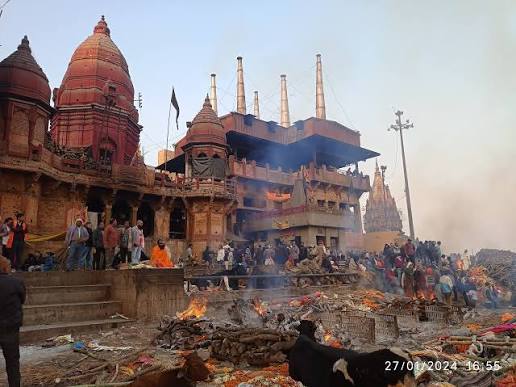
The ghat serves as a major cremation ground where families perform the last rites of their loved ones according to Hindu customs. These ceremonies express respect for the deceased and reflect religious beliefs about the transition from physical life to the next stage of existence.
For visitors, understanding this spiritual context is essential. Manikarnika Ghat is not simply a tourist attraction; it remains a functioning sacred place where families experience grief and carry out deeply personal rituals.
Manikarnika Ghat and the Belief in Moksha
Moksha refers to liberation from the cycle of birth, death and rebirth in several Indian religious traditions.
In the spiritual traditions of Kashi, Lord Shiva holds a special association with liberation. Popular beliefs connect him with the granting of spiritual guidance at the moment of death.
Many devotees therefore consider Varanasi a particularly auspicious place for the final journey of life. Manikarnika Ghat reflects this belief through its continuous role in cremation rituals and funeral traditions.
These beliefs form part of Hindu religious faith; they are not claims that historical research can independently prove.
Manikarnika Ghat’s Cremation Traditions
Manikarnika Ghat is one of Varanasi’s principal cremation ghats. Cremation rituals take place throughout the day and night, making it a living part of the city’s religious and cultural landscape.
Families and funeral workers follow established customs while conducting the last rites. The rituals vary according to family traditions, religious practices and individual circumstances.
The continuous presence of cremation ceremonies has given the ghat its identity as a sacred place associated with death and liberation.
Visitors should maintain a respectful distance, avoid obstructing funeral processions and follow local instructions. They should never treat grieving families or funeral ceremonies as entertainment.
Manikarnika Kund: The Sacred Pool
Manikarnika Kund is a sacred water tank associated with the ghat’s religious history.
According to local traditions, Lord Vishnu created or consecrated the pool during his meditation, while another legend connects the location with Goddess Parvati’s lost earring.
The kund remains an important part of the sacred geography of Kashi. Its stories demonstrate how mythology, pilgrimage and the physical landscape combine to shape the religious identity of Varanasi.
Where Is Manikarnika Ghat Located?
Manikarnika Ghat lies along the western bank of the River Ganga in the old city of Varanasi. It sits between the historic Dashashwamedh and Scindia ghats, within an area of narrow lanes, temples and traditional neighbourhoods.
Visitors can reach the surrounding area through the old city, but narrow streets and pedestrian traffic may make the final part of the journey difficult for vehicles.
Plan your route before visiting and allow additional time to walk through the old city.
How to Visit Manikarnika Ghat Respectfully
Keep these practical guidelines in mind:
- Remember that Manikarnika Ghat is an active cremation ground, not a conventional sightseeing venue.
- Respect the privacy of grieving families.
- Do not photograph or film cremations, mourners or funeral rituals without explicit permission.
- Follow instructions from local authorities and funeral workers.
- Avoid obstructing pathways, funeral processions or religious ceremonies.
- Wear comfortable footwear when walking through the old city’s narrow lanes.
- If you feel uncomfortable, leave the area respectfully.
Visitors who want to learn about Varanasi’s riverfront can also explore other ghats and heritage sites while respecting their different religious and cultural roles.
Frequently Asked Questions About Manikarnika Ghat
1. What is the history of Manikarnika Ghat?
Manikarnika Ghat has a long history as a sacred site in Varanasi. Religious literature and local traditions describe its spiritual importance, while historical research documents phases of architectural reconstruction and renovation.
2. Why is Manikarnika Ghat famous?
It is famous as one of Hinduism’s most sacred cremation grounds and for its association with Lord Shiva, Goddess Parvati, Manikarnika Kund and the belief in moksha.
3. What does the name Manikarnika mean?
The name is traditionally associated with a jewel or precious earring that Goddess Parvati is believed to have lost at this sacred location.
4. Where is Manikarnika Ghat located?
It lies on the River Ganga in the old city of Varanasi, near Dashashwamedh Ghat and Scindia Ghat.
5. Can tourists visit Manikarnika Ghat?
Visitors can approach the public riverfront area, but they must respect its active cremation rituals, follow local guidance and protect the privacy of grieving families.
Conclusion
Manikarnika Ghat offers a profound insight into the spiritual traditions and historical landscape of Varanasi. Its ancient legends, sacred kund and continuing cremation rituals connect the city’s living culture with Hindu beliefs about death and liberation.
For anyone exploring Kashi, understanding Manikarnika Ghat means looking beyond its physical appearance and recognising the religious meaning it holds for generations of devotees.
Explore more of Varanasi’s history, sacred places and local traditions with VR Hotel – Varanasi Travel Guide.